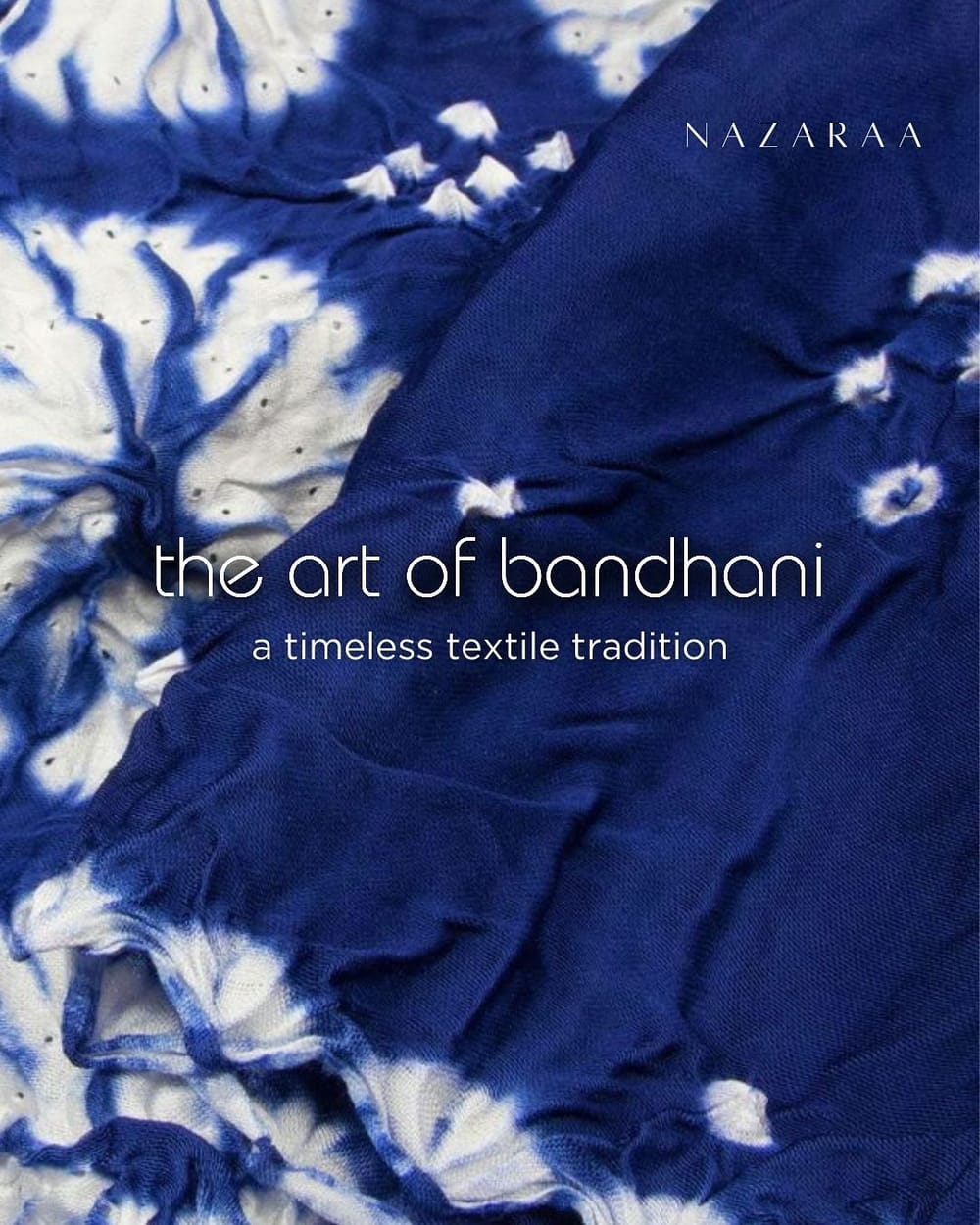
The Art of Bandhani
Bandhani is far more than a tie-dye textile. It is a living craft heritage shaped by centuries of tradition, regional cultures, ritual symbolism, and skilled artisanal techniques passed down through generations.

Today, this vibrant resist-dyeing art form is making a bold comeback in the wardrobes of India’s youth — not as just a symbol of heritage, but as a distinctive statement in modern fashion.
This study as a NIFT Gandhinagar student captures Bandhani as a vibrant textile rooted in over 5,000 years of history from Gujarat and Rajasthan. It highlights how this intricate tie-dye craft—created by tying thousands of tiny knots before dyeing—has evolved from ancient ritual and royal use to contemporary fashion.
Reference books detailing Bandhani’s origins and techniques
• Artisan interviews reflecting the craft’s living tradition
• Designer insights on Bandhani’s place in modern style
• Media research tracing market trends and consumer interest
This concise approach showcases Bandhani’s rich cultural legacy alongside its relevance as an expressive fashion statement today.
Background of Bandhani
India has a rich history of handcrafted textiles that each capture the culture, nature, and society of the area.
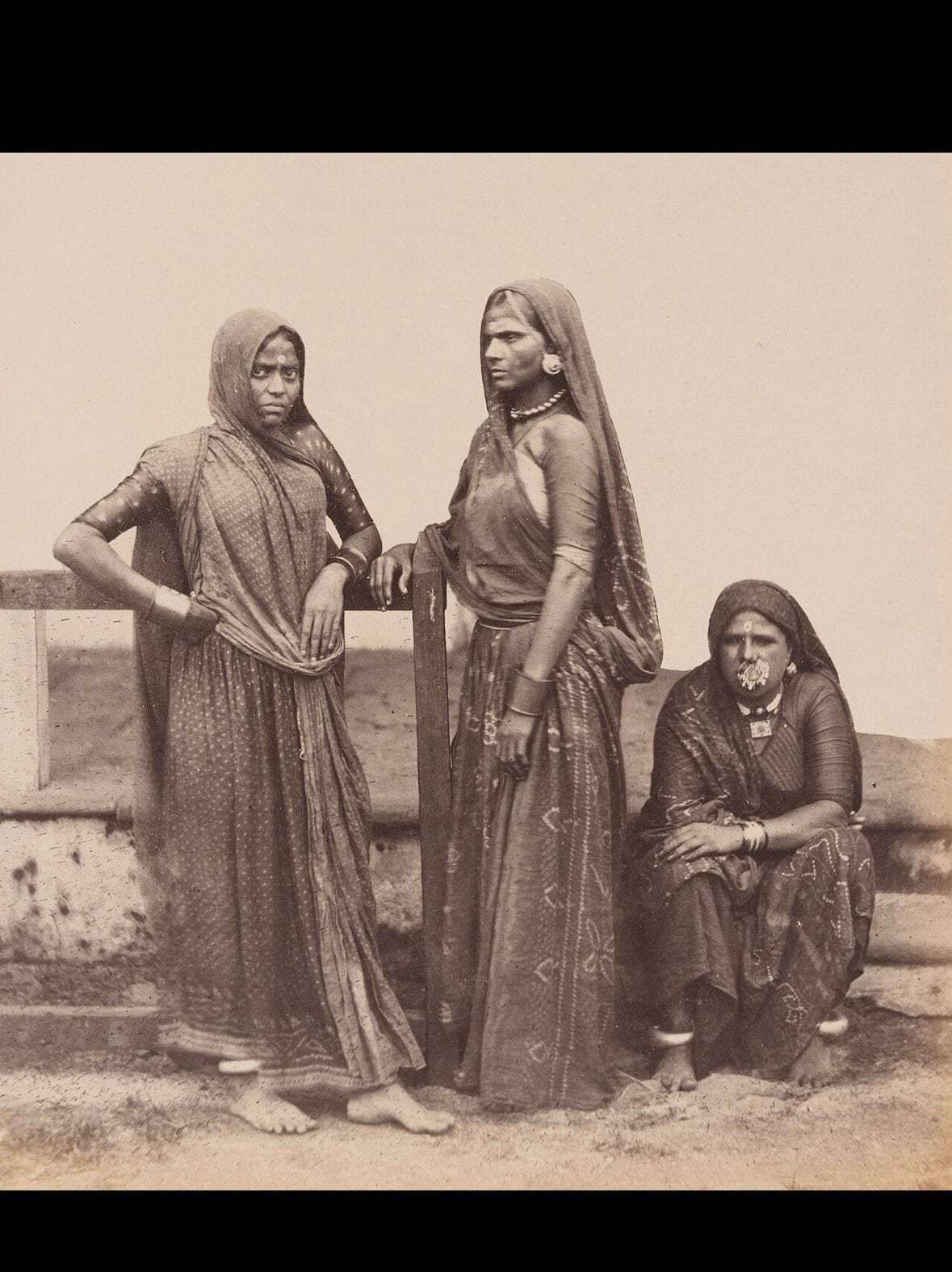
"Bandhani" comes from the Sanskrit word "Bandh," which means "to tie." In order to create lovely, dotted patterns, little pieces of fabric are tied with thread before being dyed. Bandhani is more than just a work of art.
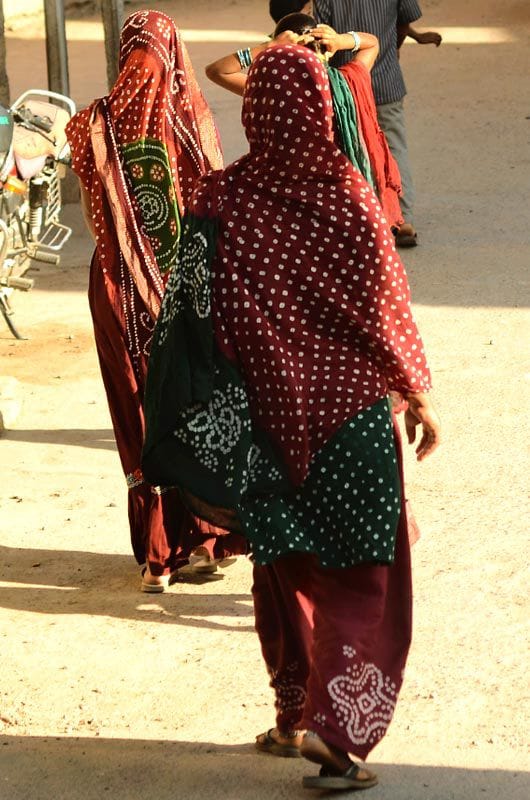
Bandhani is a very old Indian textile craft, about 5,000 years old. It is also called tie-dye. "Bandhani" comes from the Sanskrit word "Bandh," which means "to tie." In order to create lovely, dotted patterns, little pieces of fabric are tied with thread before being dyed. Bandhani is more than just a work of art; The making process involves tying small parts of the fabric tightly with thread before dyeing it. This stops the dye from reaching the tied areas, creating beautiful dots and patterns. Traditionally, natural dyes from plants and flowers were used. Bandhani has deep cultural meaning.its colors and designs stand for different social and religious events. It is mainly made in Rajasthan and Gujarat, especially by communities like the Khatris who have kept this craft alive for many generations. This simple, skilled art connects history and culture through fabric.
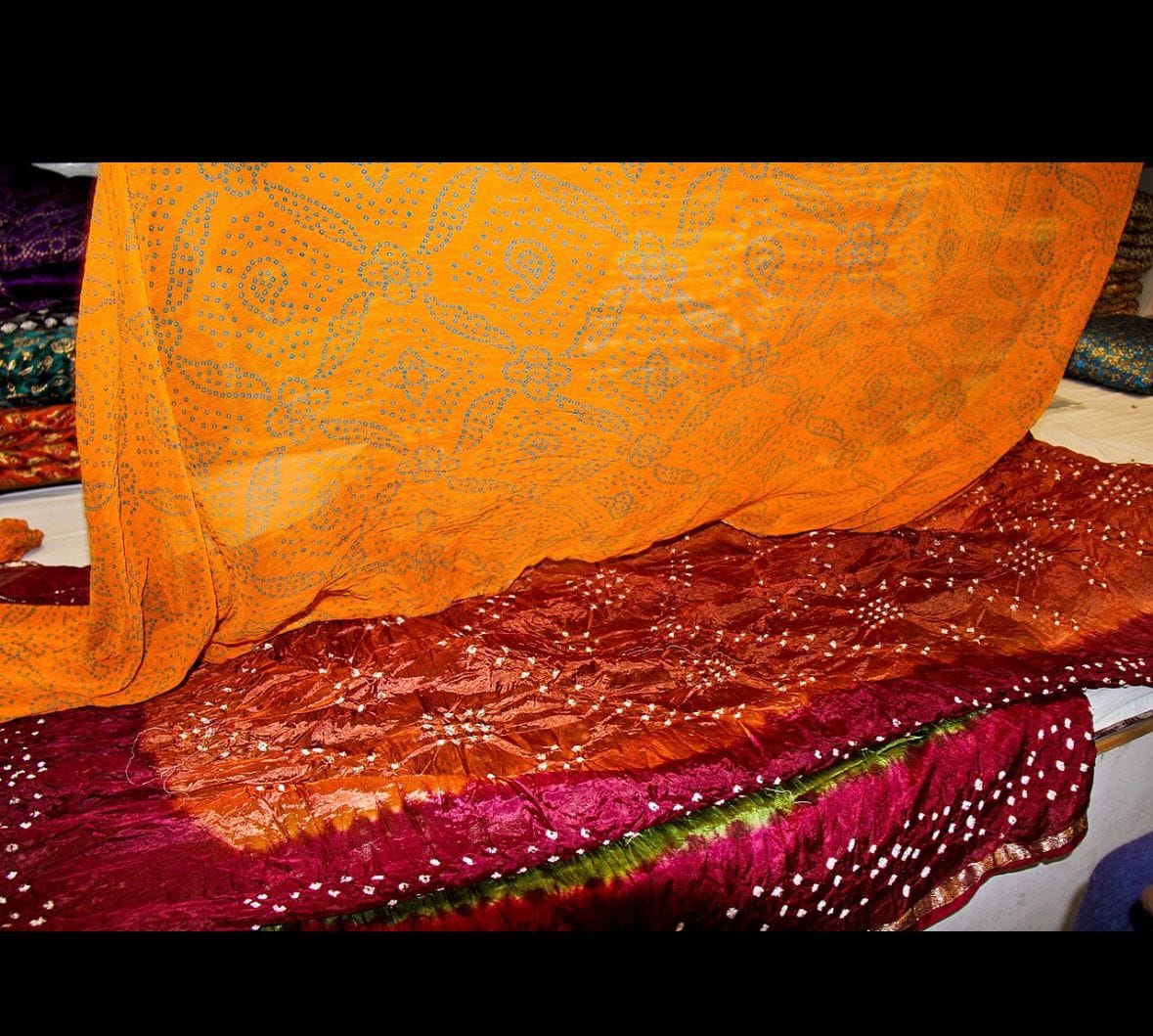
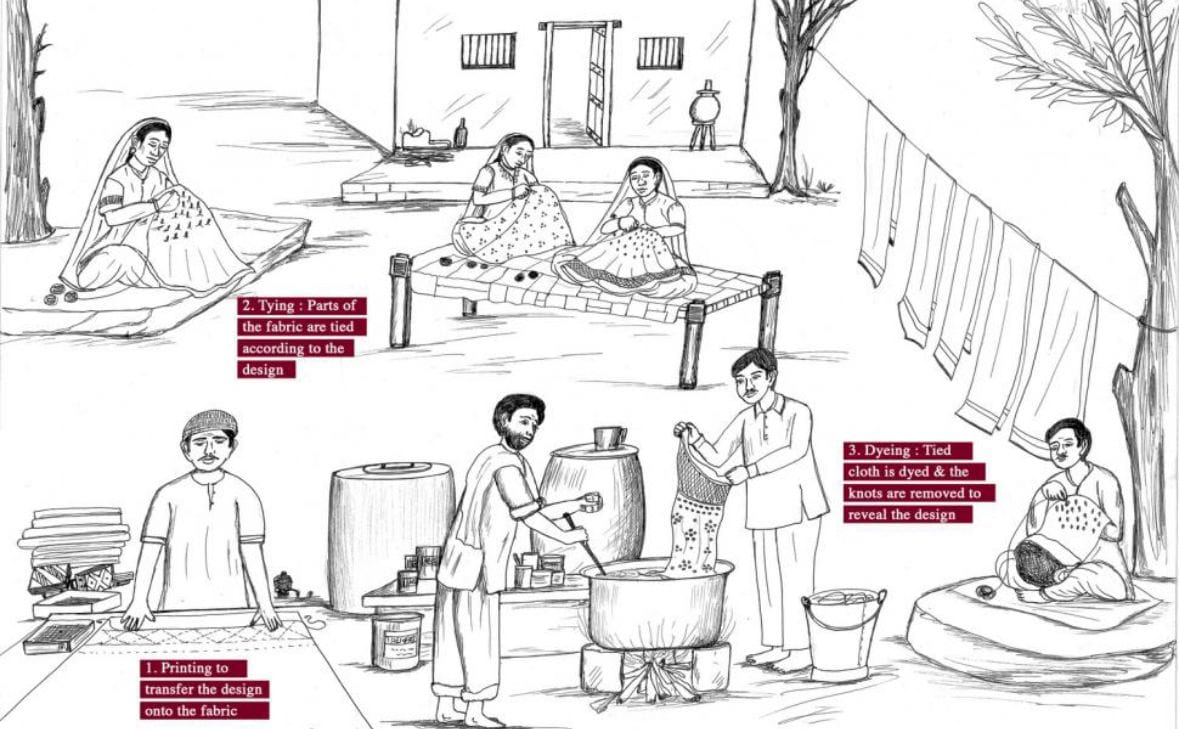
The technical process of Bandhani involves several precise steps using specific fashion and textile terminology.
- Fabric Selection: Lightweight cotton, silk, chiffon, or georgette is typically chosen for its dye absorption and texture.
- Design Marking: The pattern is transferred onto the fabric using stencils or block printing to guide the tying process.
- Tying (Bhindhi Bandhavu): Thousands of tiny knots (bindings) are meticulously tied by hand, often pinching the fabric with fingernails or a metal ring with a pointed nail. These knots act as resist points to block dye penetration.
- Dyeing: The fabric undergoes multiple dye baths, starting with lighter colours and progressing to darker hues. After each dyeing, knots are carefully untied, revealing undyed patterns against the dyed background.
- Drying: The fabric is dried between dyeing sessions to fix the colours.
- Multiple Tie-Dye Cycles: This repetition creates intricate patterns like dots, waves, and floral motifs, adding depth and complexity to the fabric.
- Finishing: Once the final dyeing and untying are done, the fabric is washed to remove residues and prepared for garment construction.
This traditional resist-dyeing technique, also known as Bandhej, demands patience and skill, resulting in vibrant, pattern-rich textiles celebrated in contemporary fashion.
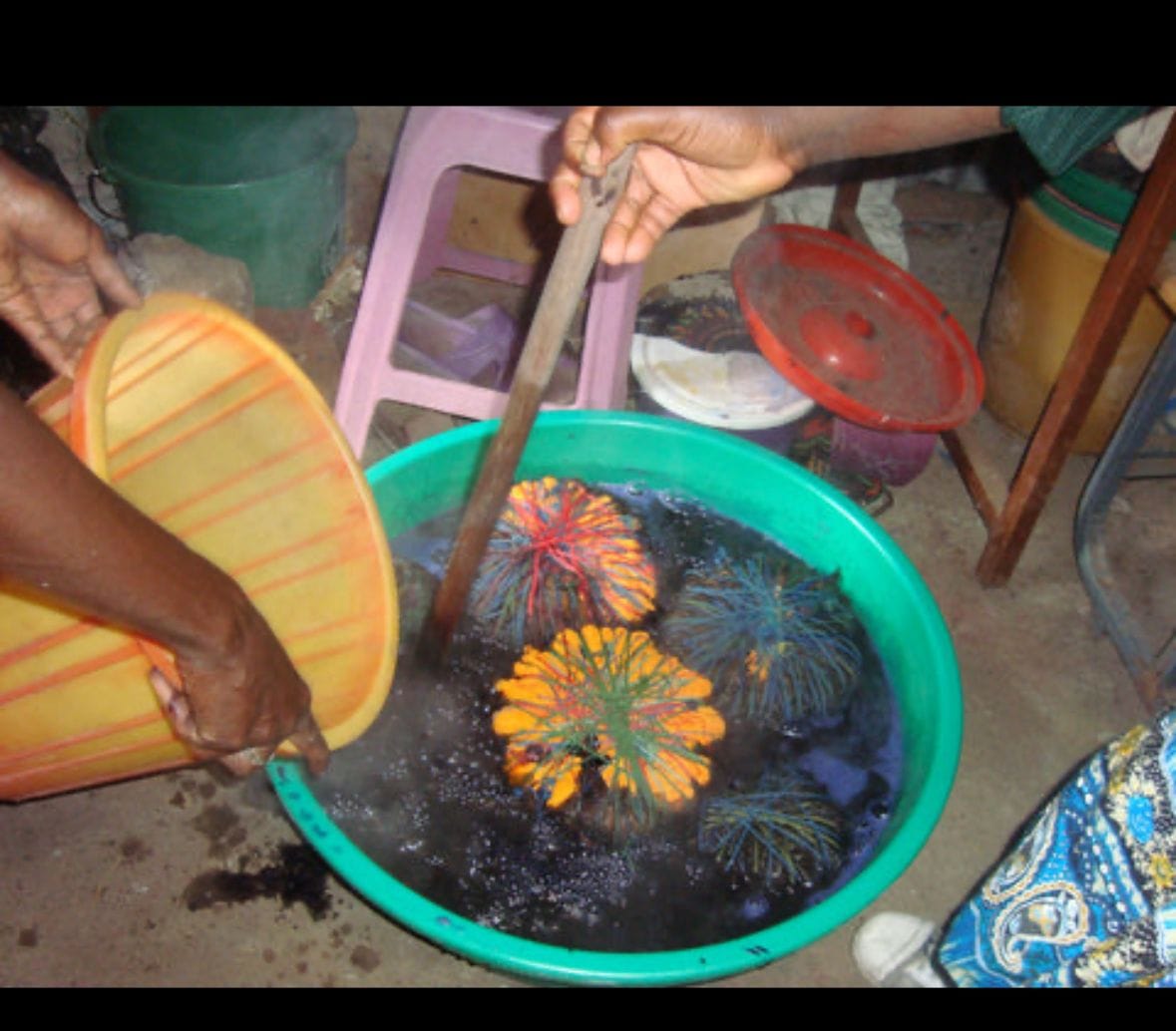
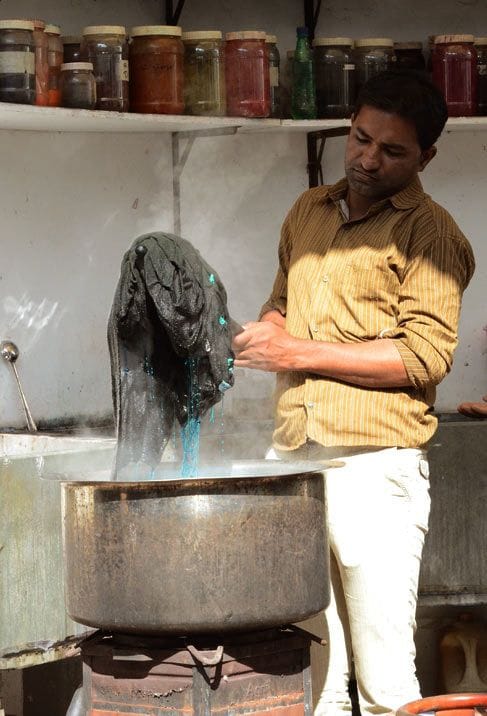
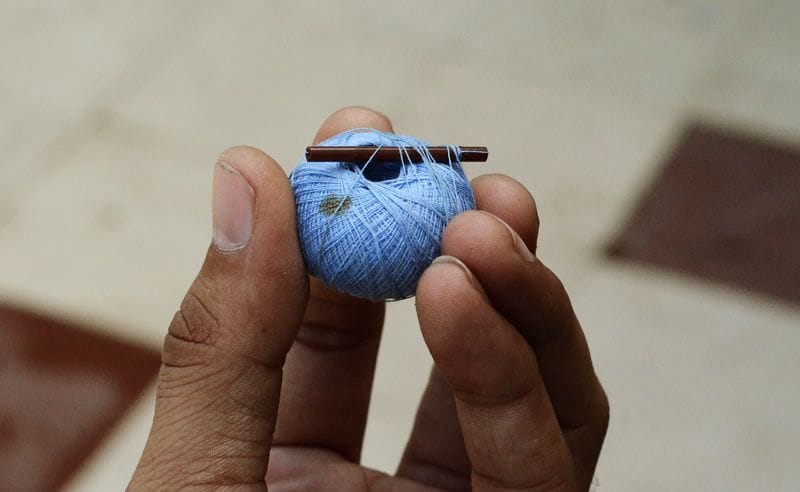
Bandhni across fashion categories
Bandhani in Today’s Contemporary Scene Traditionally a craft of rural artisans, Bandhani has evolved to become a prominent feature in urban and festive wardrobes. It now graces runways, boutique collections, and casual wear lines, creating a bridge between heritage and modern fashion.
Key Production Regions
Craftsmanship thrives mainly in Gujarat, Rajasthan (notably in Jamnagar, Bhuj, and Jaipur), where artisans skill fully produce Bandhani using age-old methods passed through families.
Small-scale artisans and cooperative workshops continue this legacy, supported by cultural organisations, design institutions, and eco-conscious brands focused on sustainability
Bandhani Across Fashion Categories
• Bridal Wear: Bandhani is a bridal favourite, especially in rich reds and silks, adorned with zardozi and gotta work for elegant wedding ensembles.
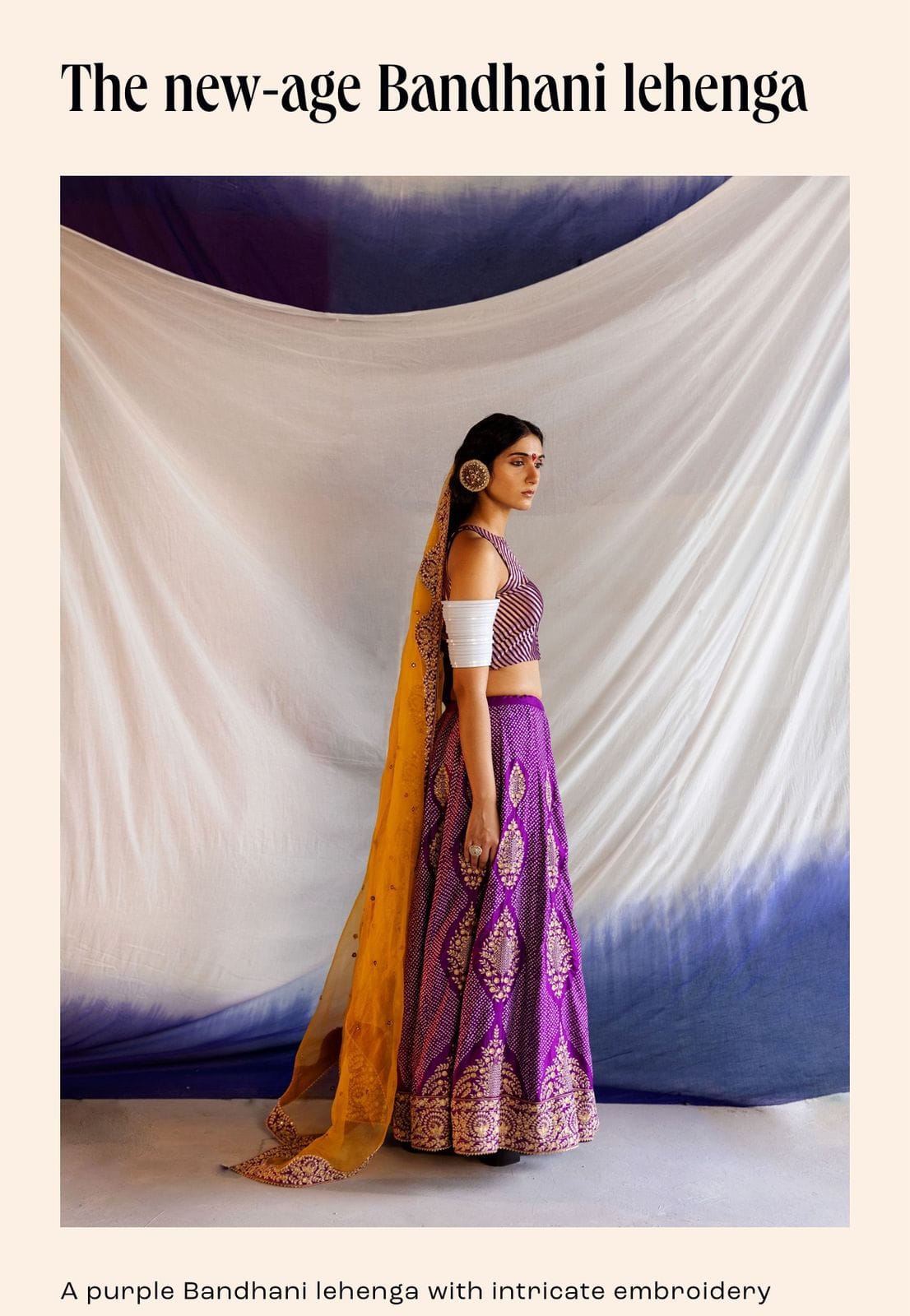
• Festive Ethnic: Sarees, lehengas, kurtas, and dupattas featuring Bandhani patterns are staples for festivals and traditional events, often paired with chikankari and other regional crafts.
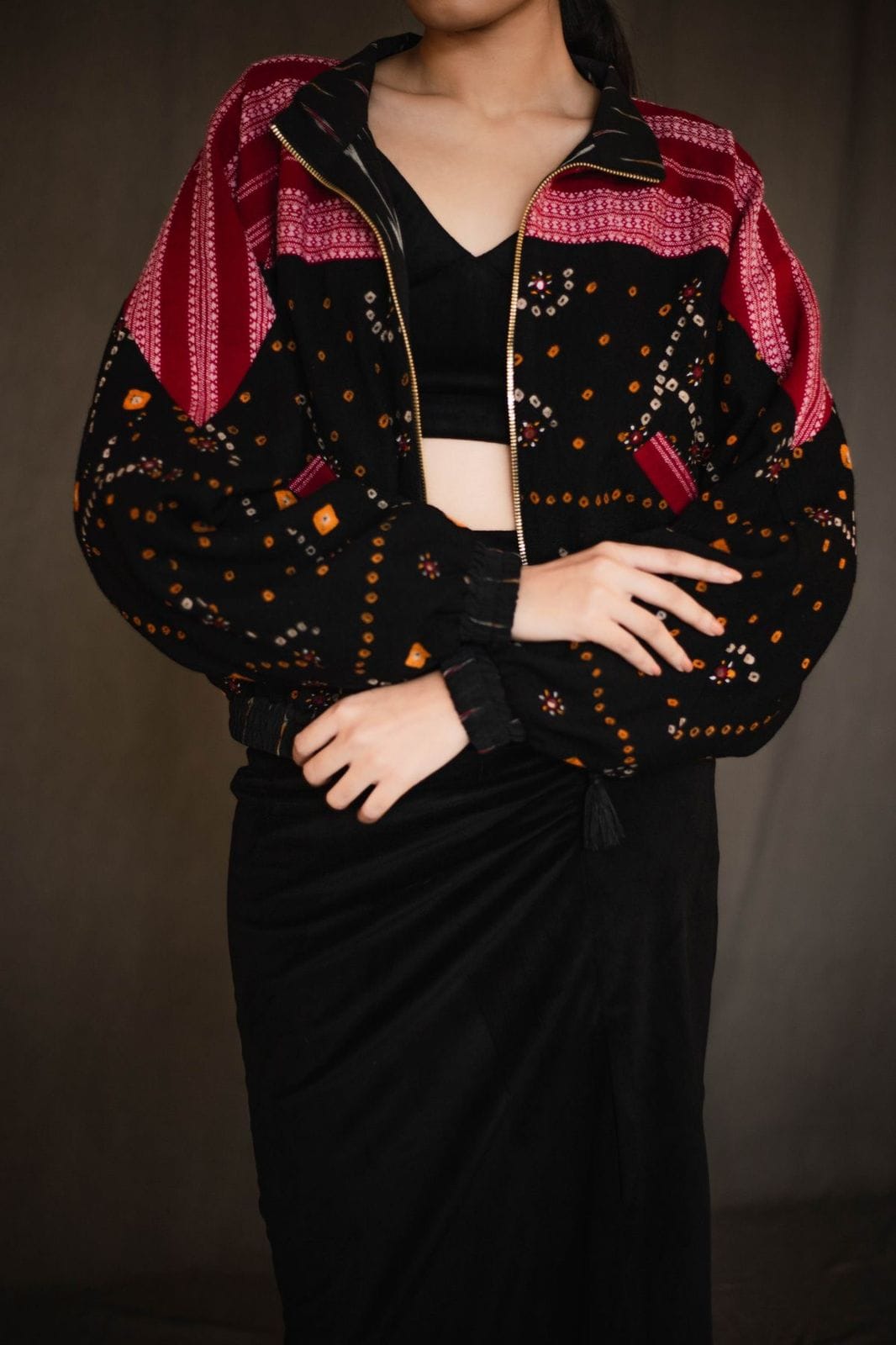
• Fusion and Casual Wear: Modern Bandhani appears in co-ord sets, kaftans, jumpsuits, and even crop tops paired with denim or jackets, creating fashionable Indo-Western looks.
• Accessories and Lifestyle: Bandhani prints extend to scarves, bags, and home décor, integrating the craft into everyday style.
• Runway and Couture: Designers experiment with bold colors, new silhouettes, and innovative combinations, pushing Bandhani into contemporary fashion spotlight.
Current existence
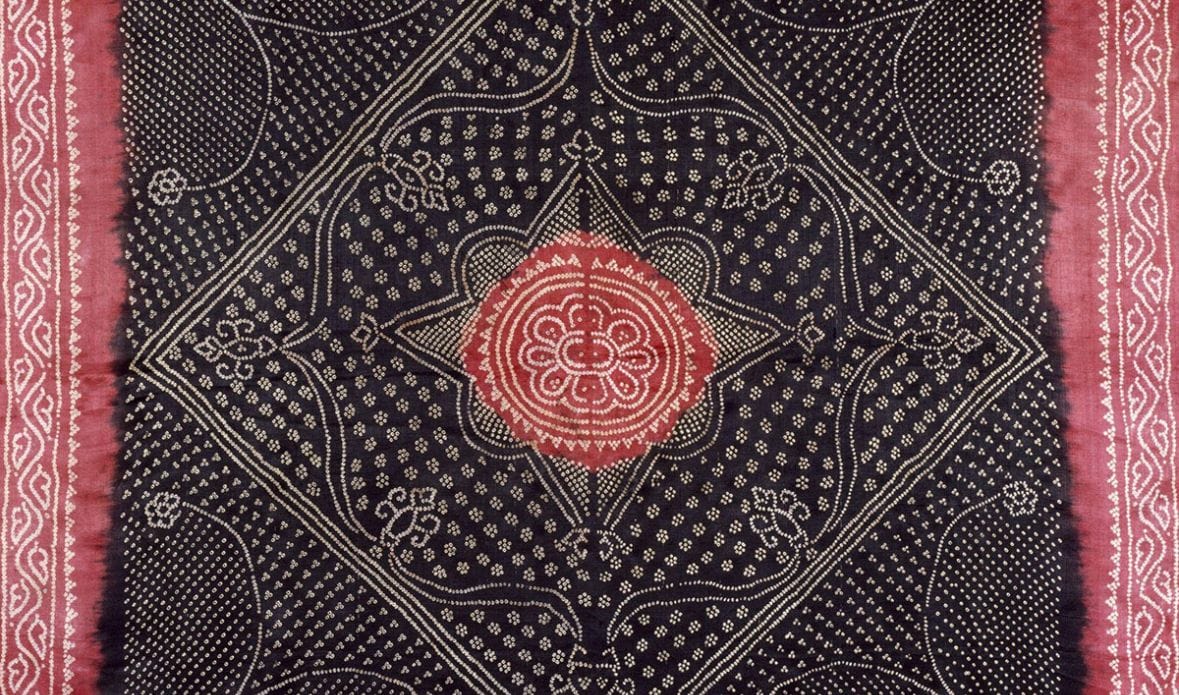
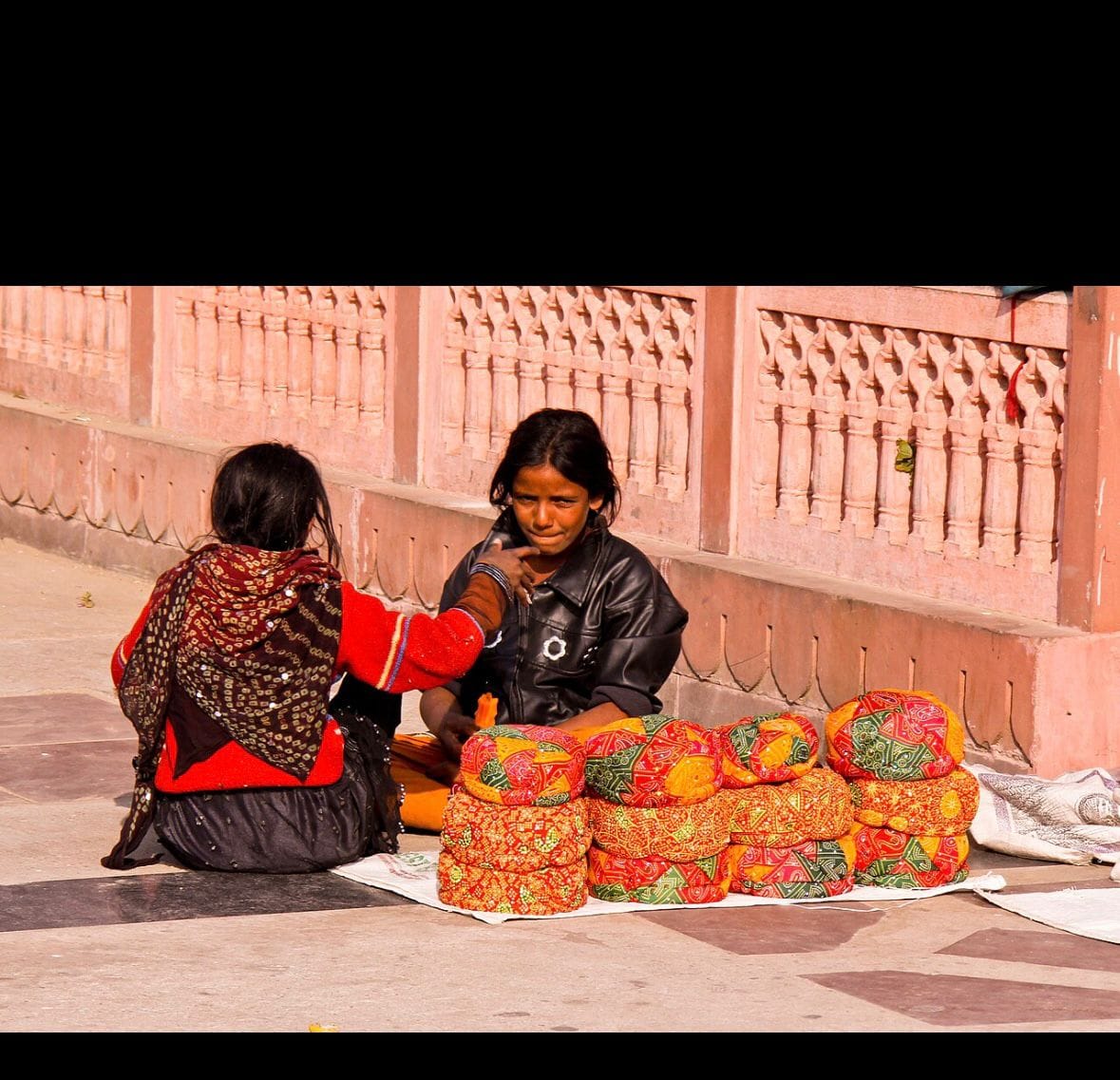
Bandhani is still a vibrant craft, mainly practiced in Gujarat and Rajasthan by communities like the Khatris. Artisans use a detailed tying method, sometimes making up to 100,000 tiny knots per meter of fabric to create delicate patterns. Bandhani is commonly seen in sarees, dupattas, turbans, and even modern fashion items, making it a part of both everyday wear and important events like weddings and festivals. Despite competition from machine-made textiles, Bandhani remains popular because of government support and growing interest in traditional arts and handcrafts. This blend of old techniques with new fashion keeps Bandhani alive and relevant today.
Impact
Bandhani is an important part of modern fashion and Indian culture. Designers today mix traditional Bandhani patterns with new styles, colors, and fabrics to create fresh and exciting fashion. You can find Bandhani not only in sarees but also in dresses, jackets, skirts, and fusion wear that blend Indian and Western styles. It is especially popular during weddings and festivals, showing cultural pride and identity.
This craft also helps many artisan families by giving them jobs and connecting them to global markets through exhibitions, social media, and online shopping. Each Bandhani piece tells a story of India’s rich heritage and the skill of its makers. By blending old traditions with modern trends, Bandhani continues to thrive as a timeless and meaningful art form.
Bandhani Impact in Four Simple Points:
1. Social Impact
Bandhani artisans, especially women, gain recognition and economic empowerment through their craft.
2. Economic Impact
Transforming Bandhani from raw fabric to finished fashion increases artisan income and ensures steady demand.
3. Environmental Impact
The craft uses natural dyes and sustainable methods, though managing growth and synthetic dyes remains a challenge.
4. Cultural & Fashion Identity Impact
Bandhani blends tradition with modern style, enabling youth to express individuality through heritage fashion while supporting artisan communities globally.
This captures Bandhani’s layered influence on craft, community, commerce, and cultural identity.
INTERVIEW – Artisan (Jamnagar)
Q: What inspires your craft every day?
A: The legacy our hands carry and the joy of creating vibrant colors that tell stories of celebration and heritage.
Q: How is Bandhani evolving with modern fashion?
A: Youngsters love how Bandhani dots transform into bold prints on dresses, skirts, and fusion wear, mixing tradition with today’s trends.
Q: What keeps you motivated despite challenges?
A: Every knot tied represents patience and passion; seeing people wear our work with pride makes it worthwhile.
Portrait of Kamla tying fabric in a bright, sunlit workshop surrounded by colorful dyes and finished Bandhani pieces.
This captures Bandhani artisans’ deep connection to their craft, their adaptation to changing tastes, and the cultural pride they inspire.
Photo documentation
1. Craft Process Documentation
Tightly tied fabric bundles ready for dyeing — “Knots of patience shaping vibrant heritage.”
Natural dye pots lined for color infusion — “Earth-born hues brought to life through skill.”
Sun-dried Bandhani fabric layers — “Solar treatment refining color brilliance.”
2. Texture & Motif Shots
Macro of circular Bandhani dots — “Precision in every tie, timeless in every pattern.”
Close-up of intricate border design — “Handcrafted symmetry woven into fabric edges.”
3. Fusion Styling
Bandhani jacket paired with denim jeans — “Tradition tailored for urban chic.”
Unisex Bandhani kurta and pants co-ord — “Breaking boundaries with heritage print fluidity.”
Bandhani scarf and clutch — “Crafted accessories linking culture and contemporary flair.”
Close-up of vibrant red and mustard Bandhani dots on soft cotton fabric — “Subtle hues, bold stories.”
References Used for Bandhani
- Books on traditional Indian textiles and tie-dye techniques
- Articles on craft sustainability, artisan communities, and eco-friendly practices Interviews with Bandhani artisans and contemporary designers
- NIFT craft research and archival materials Market research on ethnic and fusion fashion trends
- Consumer behavior and streetwear popularity reports
Key Fashion Vocabulary
Silhouette, flow, fabric hand feel, surface embellishment, motif, pattern repeat, crafted border, colour palette, prêt-à-porter, couture, diffusion range, unisex fit, circular fashion, non-seasonal, utility features